

In the evolving energy landscape, the meter is becoming a cornerstone of system flexibility. Across global grids, smart metering infrastructure is transforming from a passive data collector into an active participant in balancing demand, integrating renewables, and managing grid stability in real time.
From Measurement to Management
Historically, metering provided one-way insight: utilities sent power out, meters logged usage, and bills followed. Today, the shift to distributed energy, from rooftop solar to electric vehicles and home batteries, demands two-way intelligence. Meters are increasingly the edge nodes of a digital energy ecosystem, capturing, analysing, and transmitting data that informs everything from local load balancing to national grid coordination.
In the UK, for instance, flexibility markets are expanding rapidly. The National Energy System Operator (NESO) is piloting local flexibility services where real-time consumption data helps operators absorb wind and solar surpluses without curtailment. Similarly, in Australia, the Australian Energy Market Commission now requires Distribution Network Service Providers to plan for resilience and flexibility, with metering data at the centre of that strategy.
Why Flexibility Matters
Renewables are transforming generation profiles, but their variability has also introduced new complexities. Energy flexibility, the ability to adjust consumption or generation in response to system needs, has become critical to maintaining reliability and affordability.
Smart meters enable this by providing real-time visibility and control.
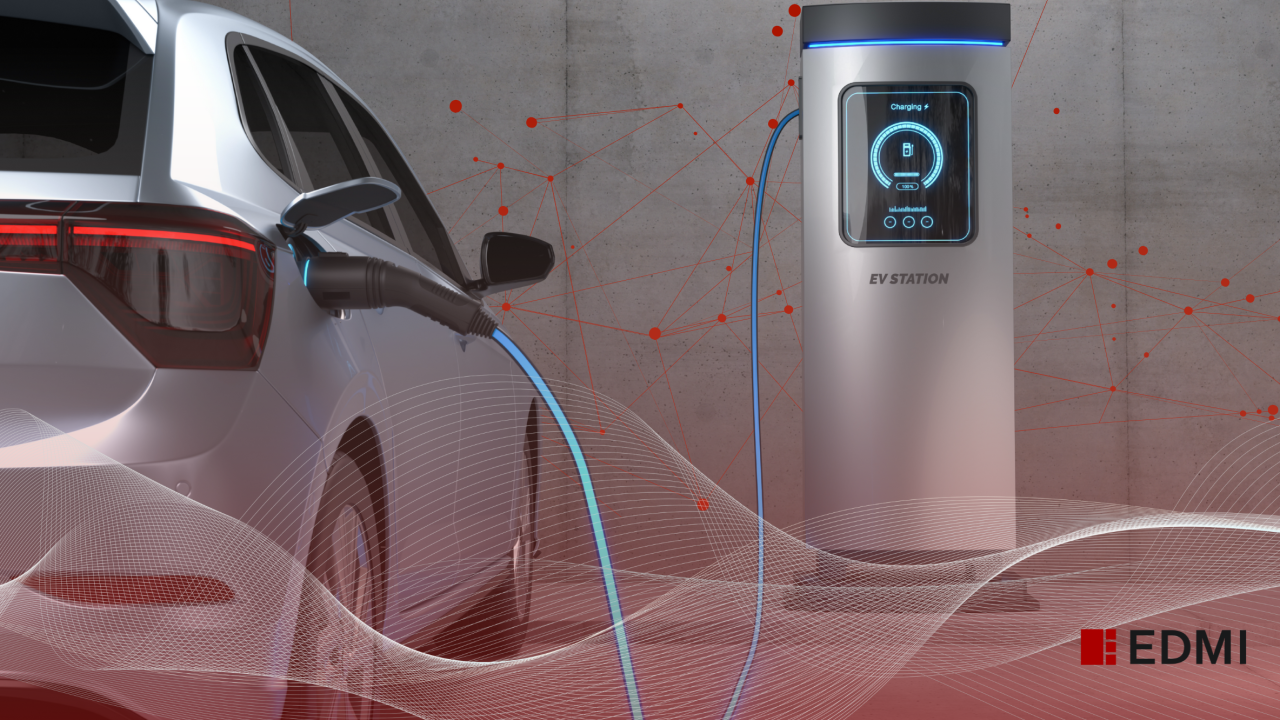
By identifying when EVs are charging, solar panels are exporting, or household batteries are discharging, utilities can orchestrate demand-side responses that smooth peaks and absorb renewables more efficiently. This not only supports decarbonisation but also defers costly grid reinforcement, a key consideration as electrification accelerates.
EDMI’s Role in the Flexible Future
EDMI’s solutions are built to help utilities navigate this transition.
- Edge Intelligence for Dynamic Control: EDMI’s meters and NEOS platform support real-time monitoring, remote configuration, and adaptive control, giving utilities the responsiveness needed for flexibility markets.
- Multi-Utility Visibility: Integrated metering across electricity, gas, and water creates unified data streams, supporting both operational efficiency and cross-sector planning.
- Secure, Scalable Architecture: With over 35 million devices deployed globally, 5 million cloud-connected, EDMI provides the cybersecurity, scalability, and reliability required for critical infrastructure.
- Consumer Engagement Tools: Empowering end users to understand and respond to energy signals ensures flexibility isn’t just a system capability, but a shared behaviour.
As noted in National Grid Readiness: A Cross-Sector Perspective, “enhanced grid readiness depends not only on physical upgrades but on the broader integration of data-driven tools and cloud-enabled coordination.” EDMI’s technology delivers precisely that, bridging the operational gap between meters, markets, and management.
Deployment Strategies for a Flexible Era
Utilities approaching metering upgrades must now plan with flexibility in mind. That means deploying infrastructure capable of supporting future market services, not just regulatory compliance.
- Design for Interoperability: Open standards and API-based architectures ensure metering data can integrate with DERMS, VPPs, and grid management platforms.
- Invest in Edge and Cloud Coordination: Hybrid architectures balance local processing power with centralised analytics for both speed and system-level insight.
- Build with Cybersecurity at the Core: As digitalisation deepens, maintaining trust through robust encryption, monitoring, and compliance remains non-negotiable.
- Enable Consumer Participation: Incentives and real-time feedback loops convert end users into flexibility partners — a step crucial to long-term grid stability.
From Passive Infrastructure to Active Enabler
The next generation of metering infrastructure is not about counting kilowatt-hours, it’s about creating capacity, resilience, and choice. In a world defined by renewable variability and electrification, flexibility is currency.
EDMI stands at the intersection of this transformation, delivering the intelligence, security, and partnership that allow utilities to move from passive measurement to active management.
Because in the flexible grid of tomorrow, every meter counts.
Other Insights
Making Sense of Grid Data at Utility Scale
Utilities today face an unprecedented data challenge.


Balancing the Grid in a Distributed Energy World
The global energy system is entering a new phase defined by decentralisation.

Grid Modernisation and the Role of Utility-Regulator Collaboration
The global energy transition is reshaping how power systems are built, managed, and governed.
